Dante's Female Universe: Moral Ideal and Historical Reality
The works of Carlotta Ferrari da Lodi, Maria Pia Michelangeli, and Maria Marchese Siotto-Ferrari inaugurated a new and fruitful field of study on the Divine Comedy. Abandoning traditional interpretations, these scholars investigated women's roles in Dante's poem with unprecedented sensitivity, unveiling a previously neglected female universe. Focusing on family dynamics and social contexts, they revealed a more complex and multifaceted Dante, deeply rooted in his era and its contradictions.
Interest in female figures in the Divine Comedy became part of a broader cultural debate characterizing post-unification Italy, intertwining with the era's deepest gender questions. Analysis of Dante's women became fertile ground for reflecting on gender roles and female aspirations, representing diverse ideological currents of the time—from radical conservatism confining women to domestic life, to progressive liberalism advocating full emancipation, alongside Catholic, positivist, and democratic perspectives.
The Comedy itself, with its multiple female figures, became a key text for interpreting and redefining gender roles, offering ground for debate that still challenges us today.

On Beatrice
Works dedicated to Beatrice Portinari offer an interesting overview of the widespread interest in Dante's muse, particularly around the late 19th and early 20th centuries.
The celebration of the sixth centenary of her death in May 1890 marked a moment of renewed fervor around Beatrice's figure, evidenced by numerous publications dedicated to her.
These works offer various interpretations of Beatrice, from her representation as an ideal of beauty and purity to her role as inspiration for the Divine Comedy. The geographical spread of these publications—from Florence to smaller towns like Casalbordino and Lagonegro—indicates widespread national interest.

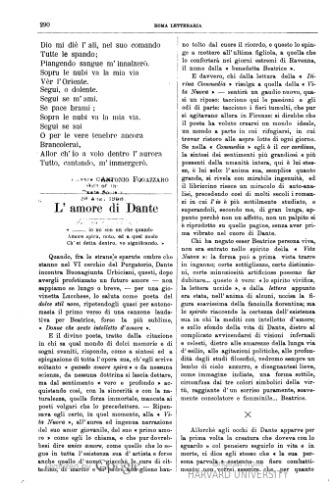
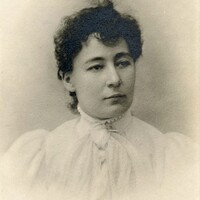

Celebrating Beatrice and Italian Women: The 1890 Exhibition
The Beatrice Exhibition, held in Florence in 1890, celebrated the sixth centenary of Beatrice Portinari's death, Dante's muse. Promoted by intellectuals, it highlighted women's roles in Italian culture and demonstrated women as active cultural protagonists, not mere spectators.
The event featured conferences, theatrical performances, tableaux vivants, artworks, and academic studies. Women like Giuseppina Bellotti, Emilia Oliper, and Regina Valenti-Castelli distinguished themselves through in-depth Dantean analyses.
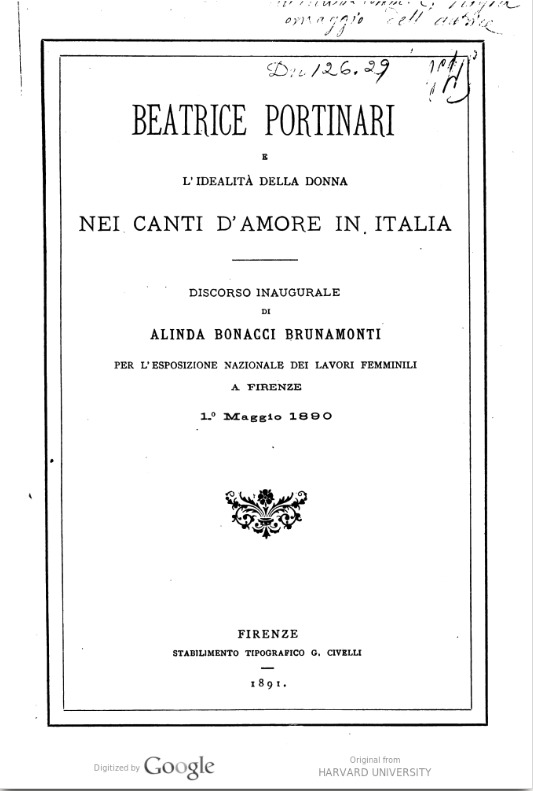
Carlotta Ferrari documented the exhibition in two volumes of women's essays. The first collected May 1890 conferences, including Rossi Gasti's award-winning analysis of women in the Divine Comedy and Bonacci Brunamonti's inaugural speech on Beatrice Portinari. It explored Italian women's historical and contemporary roles, from philanthropy to emerging professions.
With forty-three analytical contributions, "A Beatrice Portinari" showcased diverse female interpretations of Dante's work—from rigorous textual analyses to creative reinterpretations—establishing women as authoritative interpreters of Dante.