Beyond Florence: Ravenna
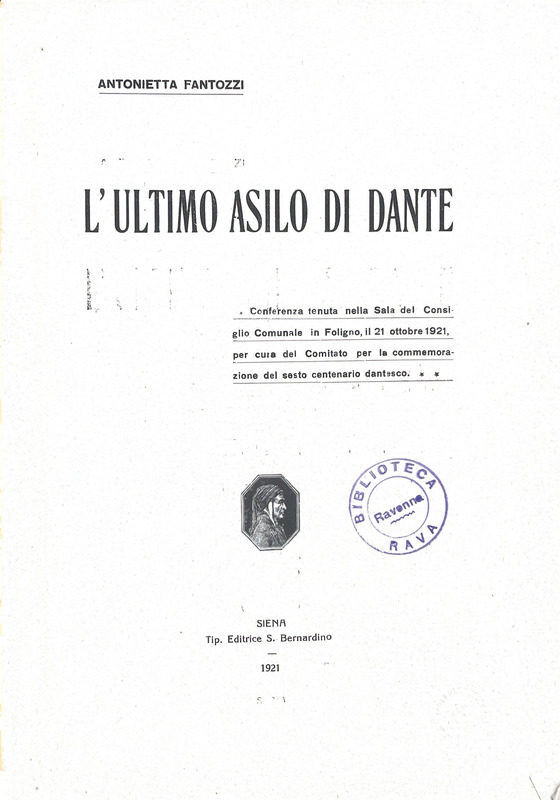
Ravenna, Dante's last refuge (as it is addressed in many writings), was the subject of number of works by women writers as well as object of pilgrimage due to its connection with the Sommo Poeta. The texts here displayed focus on Ravenna and on the last years of Dante's exile.
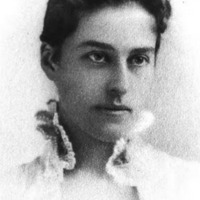
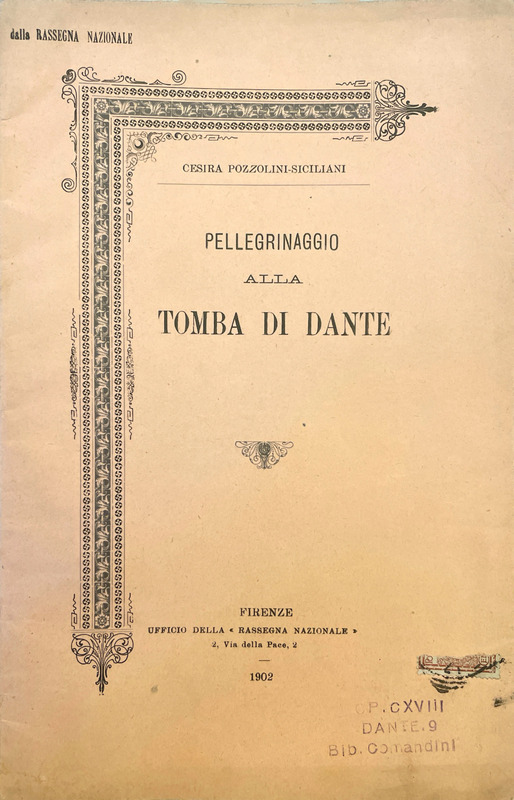
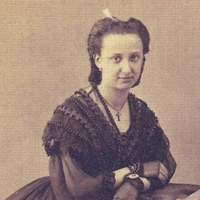
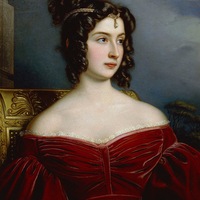
To celebrate the six centenary from Dante's birth, Italian author Elisa Tagliapietra dedicates to the poet's memory the poem Un’ora con Dante a Ravenna. Afterwards, in 1898, Dante at Ravenna: a study is published by British writer Catherine Mary Phillimore and translated in 1901 by Rosmunda Tonini. In 1902, Cesira Pozzolini Siciliani publishes on the journal Rassegna Nazionale her article Pellegrinaggio alla tomba di Dante, where the poet's tomb is described as a place of worship. Moreover, Marianna Florenzi Waddington, born in Ravenna, will write a critical essay on Dante, Saggio sulla natura; Dante, il poeta del pensiero (1866).
Edited by Francesca Sartori

Dantean Adaptations: Children's Literature and Illustrated Editions
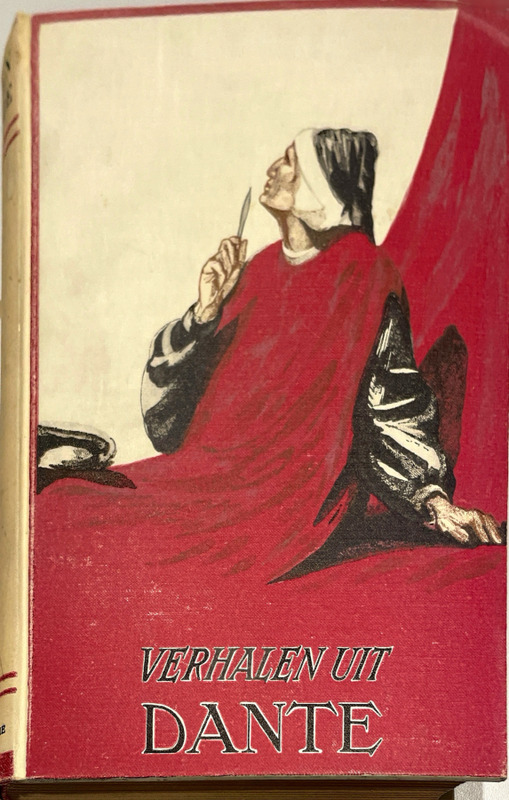
Stories from Dante is an English prose adaptation of the Comedy by Susan Cunnington, published in 1909 for young and non-specialist audiences. Divided into three sections (one per cantica), each opens with the author describing the structure of Hell, Purgatory, or Paradise. Each chapter profiles a Comedy character—notably all male except Countess Matilda of Canossa, underscoring the poem's scarcity of women. The text's popularity led to numerous reprints and translations, including the 1924 Dutch edition Verhalen uit Dante.
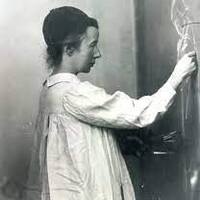
Cunnington's text features illustrations by Pre-Raphaelite painter Evelyn Paul of the Arts and Crafts movement, who in 1916 created an illuminated Vita Nova, demonstrating her sustained interest in Dante.
In 1902, Phoebe Anna Traquair, also of the Arts and Crafts movement, had created another illuminated Vita Nova. The two works targeted different audiences: Traquair's for expert Dante scholars, Paul's for popular readership. Traquair also authored Dante Illustrations and Notes (1890), combining Comedy illustrations with brief introductory notes.

Dantean Adaptations: Dramaturgy of Dante's Life and Works Sara Fontana (University of Turin)
The nineteenth century saw the clearest and most ambitious revival of Dante Alighieri's works and figure, as theater appropriated the universal themes of the Comedy and established Dante's reputation as both poet-patriot and champion of liberty. The century offered women—actresses and writers—the opportunity to build artistic careers in dialogue with the Poet, providing an early gendered perspective on Dante's reception.
Prime actresses like Carlotta Marchionni and Adelaide Ristori built their fortunes partly through interpreting Francesca da Rimini, while Italian authors like Angelica Bartolomei Palli wrote Dante a Verona (1872), featuring Dante tormented by the improper love of Beatrice, daughter of the Duke of Mantua. American Heloïse Durant Rose created Dante a Dramatic Poem, tailored for Ermete Novelli's interpretive skills at Verona's Teatro Filarmonico.
This artistic legacy continued and gained importance in the twentieth century (notably Eleonora Duse's masterful interpretation of D'Annunzio's Francesca) and flourished from the late twentieth century into the 2000s, when women became Dante's primary readers and interpreters.