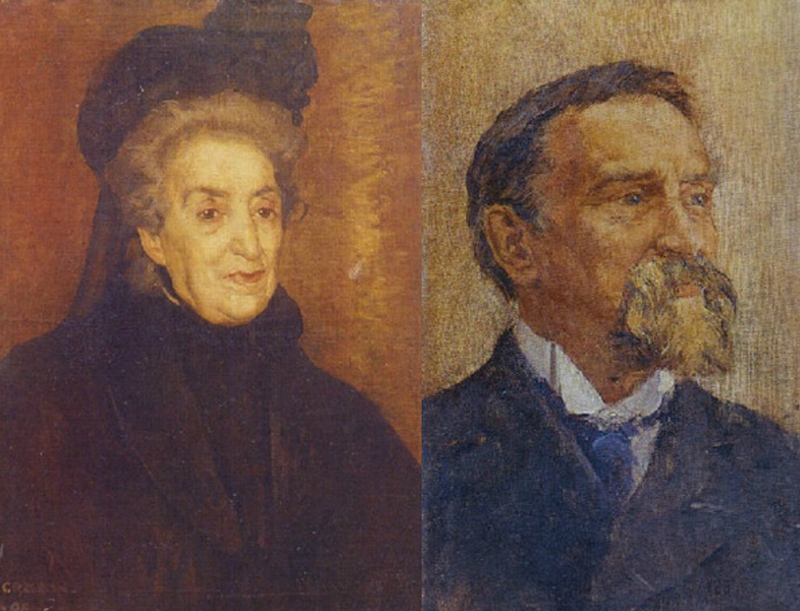
Figlia del classicista Giovanni Tagliapietra, Elisa ereditò la passione per la poesia ma non il suo misantropismo. Costretta a leggere al padre cieco fin da giovanissima, la sua vocazione artistica fu precocemente stimolata. Sposatasi con il politico Luigi Cambon, Elisa sognò di affermarsi come poetessa, ma la timidezza e l'assenza di un talento eccezionale la tennero lontana dalla ribalta letteraria. Madre di cinque figli, tra cui la poetessa Nella e la cantante lirica Margherita, morì nel 1913 senza vedere realizzato il suo sogno di una Trieste italiana.
Elisa Tagliapietra fu un'anima animatrice della vita culturale triestina della seconda metà dell'Ottocento. Il suo salotto, ospitato in una villa neogotica sul colle di San Luigi, divenne un punto di riferimento per l'intellighenzia filo-italiana. Qui, ogni mercoledì sera, si incontravano poeti, scrittori, politici e professori, in un vivace scambio di idee e opinioni. Il salotto di Elisa Tagliapietra non era solo un luogo di ritrovo, ma un vero e proprio centro culturale, dove si discuteva di letteratura, politica e attualità. La sua casa era aperta a tutti coloro che condividevano l'ideale dell'unificazione nazionale e che nutrivano una profonda ammirazione per la cultura italiana. Grazie alla sua capacità di riunire personalità di spicco, Elisa Tagliapietra contribuì a far sì che Trieste diventasse un importante crocevia culturale e intellettuale, in attesa dell'annessione all'Italia.
AUTHOR of Thoughts and Remembrances a volume of poems evincing wealth of fancy and much ease and freshness comes of an ancient Aberdeenshire family She is the third daughter of John Farley Leith Esq QC of the English Bar and Bencher of the Middle Temple late Member of Parliament for the City of Aberdeen Miss Leith was born in Calcutta where her father was then practising at the Bar as a leading Counsel She has been a frequent contributor of poems to various magazines and newspapers under the signature of EL and her volume of poems which has been very favourably received was published by Messrs David Bryce & Son Glasgow in 1885 The printer and publisher have with conspicuous taste and success aided her efforts to provide a little work that will be prized not only by the ordinary reader but by the cultured and scholarly as well Her thoughts evince natural tenderness meditative imagi nation and genuine poetical feeling expressed in pure and graceful language
an English poet, one of a group of lively and somewhat political British fin de siècle poets.
She was born in Avranches, France. Her parents were the writer John Webb Probyn and Mary Christiana née Spicer;, and the novelist and short-story writer Sophie Dora Spicer Maude was a cousin.[4] She was the first love of William Satchell, who published the first two of her three books of poetry. She published a novel in 1878, and became a Catholic convert in 1883.[7] Among her friends were W. B. Yeats, Thomas Westwood, the fishing writer,[8] Vernon Lee,[9] and Katharine Tynan, with whom in 1895 she published Christmas Verses, consisting of four poems by Probyn and two by Tynan.
Probyn is buried in St Mary Magdalen Roman Catholic Church, Mortlake.Her grave is inscribed 'That, being dead to this world, she may live to thee'.
A number of Probyn's poems have been set to music, including "Vilanelle" by Jacques Blumenthal in 1899 and "Come What Will, You Are Mine To-day" by Henry Kimball Hadley in 1909.